The Fear of Speaking Korean, with Dr. Klein
Overcoming the Fear of Speaking Korean: Embracing Mistakes for Fluency
Learning a new language is akin to embarking on an adventure with promises of exciting discoveries and new connections. Yet, for many, this journey is fraught with hesitation and fear, especially when it comes to speaking a foreign language. This is particularly true for learners of Korean, who often find themselves equipped with knowledge of grammar and vocabulary but still shy away from real-world speaking situations.
The Hesitation Behind Speaking
Why do learners often hesitate to speak, despite their diligent study? Dr. Gary Klein’s theories on decision-making, particularly his concepts of insight vs. error and naturalistic decision making, offer a compelling explanation. According to Klein, the fear of making mistakes can significantly impede our ability to act intuitively. In the context of language learning, this fear creates a barrier to fluency.
Insight vs. Error
Klein suggests that our decision-making process is often a balance between gaining insights and avoiding errors. Language learners, particularly those studying Korean, may focus heavily on avoiding mistakes rather than embracing the insights that come with trial and error. This fear of error can lead to paralysis, stalling the natural flow of conversation and inhibiting the development of intuitive language skills.
Naturalistic Decision Making
Real-world speaking practice is crucial because it mimics the naturalistic decision-making environment where learners can build intuitive skills. Through pattern recognition and small insights, learners can gradually develop confidence and fluency. The real challenge is encouraging learners to step into these situations, even when they are messy and imperfect.
Examples from Korean Language Learners
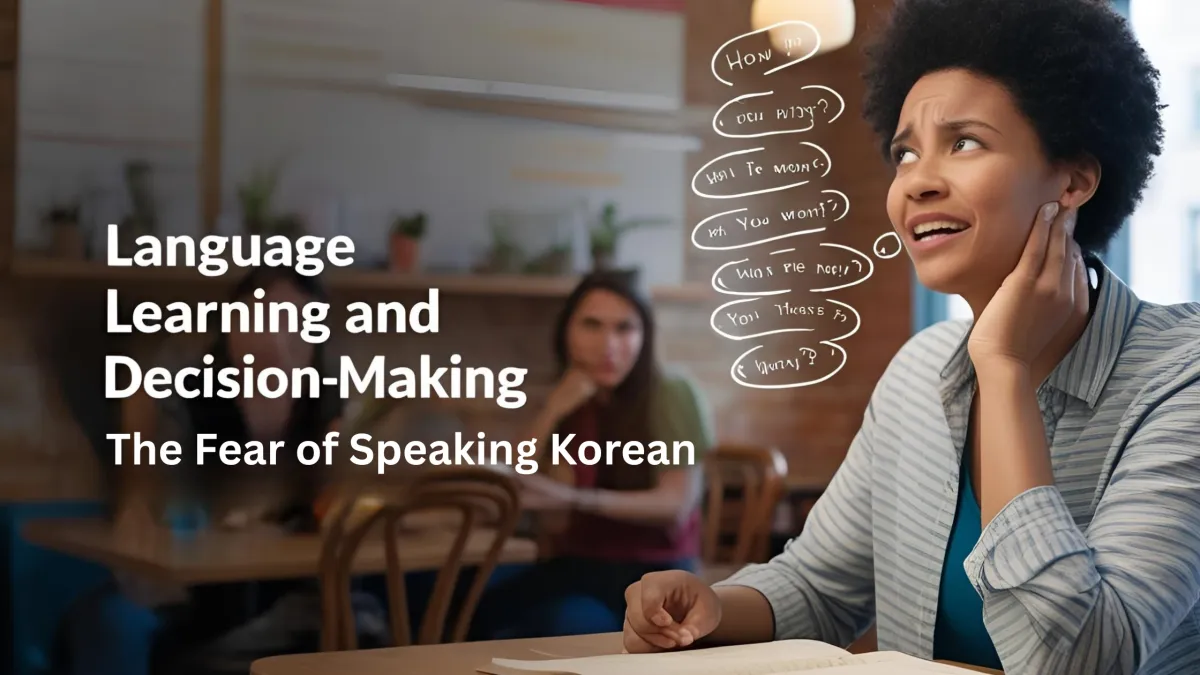
Imagine a Korean language learner at a bustling cafe in Seoul, wanting to order a simple cup of coffee. The fear of mispronouncing words or using incorrect grammar might lead them to opt for pointing at the menu instead of speaking. Similarly, during a lesson, a student might hesitate to answer a teacher’s question in Korean, fearing that their response would be riddled with errors.
These moments of hesitation are common, but they also represent opportunities for deeper learning. By pushing through these uncomfortable situations, learners can begin to recognize patterns and gain insights that books and lectures alone cannot provide.
The Value of Speaking Practice
Pre-Mortem Technique
One effective strategy to overcome this fear is the pre-mortem technique. This involves anticipating potential points of failure in a speaking situation and planning how to address them. For instance, a learner might prepare for a cafe visit by practicing common phrases and considering possible responses to different scenarios. This preparation can reduce anxiety and increase the likelihood of speaking success.
Micro-Successes
Another important concept is the value of micro-successes. Each time a learner successfully navigates a speaking situation, no matter how small, it builds confidence and reinforces the intuitive language skills needed for fluency. These successes act as stepping stones, gradually bridging the gap between knowing and doing.
Fluency Comes from Doing, Not Just Knowing
It is essential to emphasize that true fluency in Korean comes from active engagement in speaking, not just from understanding grammar and vocabulary. The classroom provides a foundational knowledge, but it is through real-world practice that learners can develop the intuitive skills necessary for fluent conversation. Mistakes should be viewed as valuable insights rather than failures.
Encouragement and Call to Action
To all Korean language learners: be bold and speak up, even if it feels imperfect. Each conversation is a step forward, each mistake a lesson learned. Remember, the goal is not perfection but progress. Embrace the adventure of speaking Korean, and let the insights gained from each interaction guide you towards fluency.
Join the Conversation
What challenges have you faced while learning to speak Korean? How have you overcome your fear of making mistakes? Share your experiences and tips in the comments below. Let’s support each other on this journey to fluency!
